mirror of
https://github.com/York-Labs/OneClickDesktop.git
synced 2026-02-22 00:57:23 +08:00

72 lines
3.6 KiB
Markdown
72 lines
3.6 KiB
Markdown
This guide helps to set up audio redirection in OneClickDesktop server with pulseaudio. The idea is to mimic a sound card and redirect sound signal such that you can watch videos and listen to songs on your server.
|
||
Note: **This guide only works for Ubuntu 18/20 and Debian 10, in XRDP mode.** It will ***NOT*** work on ***CentOS***. It will ***NOT*** work in ***VNC mode***.
|
||
|
||
Before starting, this tutorial assumes that you already have OneClickDesktop server installed and running. It also assumes that you have a non-root user for the desktop. **The audio will NOT work for the root user.**
|
||
|
||
If you haven't yet created a non-root user, you can run the following two commands in SSH to create a non-root, sudo user.
|
||
```
|
||
adduser your_username
|
||
usermod -aG sudo your_username
|
||
```
|
||
|
||
## 1. Build pulseaudio and pulseaudio-xrdp
|
||
Run the following command to build pulseaudio and pulseaudio-xrdp.
|
||
```
|
||
wget https://raw.githubusercontent.com/Har-Kuun/OneClickDesktop/master/plugins/Audio/AudioRedirectionSetup.sh && sudo bash AudioRedirectionSetup.sh
|
||
```
|
||
After running the script, please **reboot** your server.
|
||
|
||
## 2. Set up volume control in desktop
|
||
Because of a known glitch of pulseaudio in newer versions of Ubuntu and Debian, there are a couple of post-installation steps required before hearing sound from your server.
|
||
|
||
### Ubuntu 18
|
||
Ubuntu 18 is the easiest. Simply log into your server desktop with a non-root user, and you should be ready to use audio out-of-the-box.
|
||
|
||
### Ubuntu 20
|
||
1. Log into your server desktop with a non-root user.
|
||
|
||
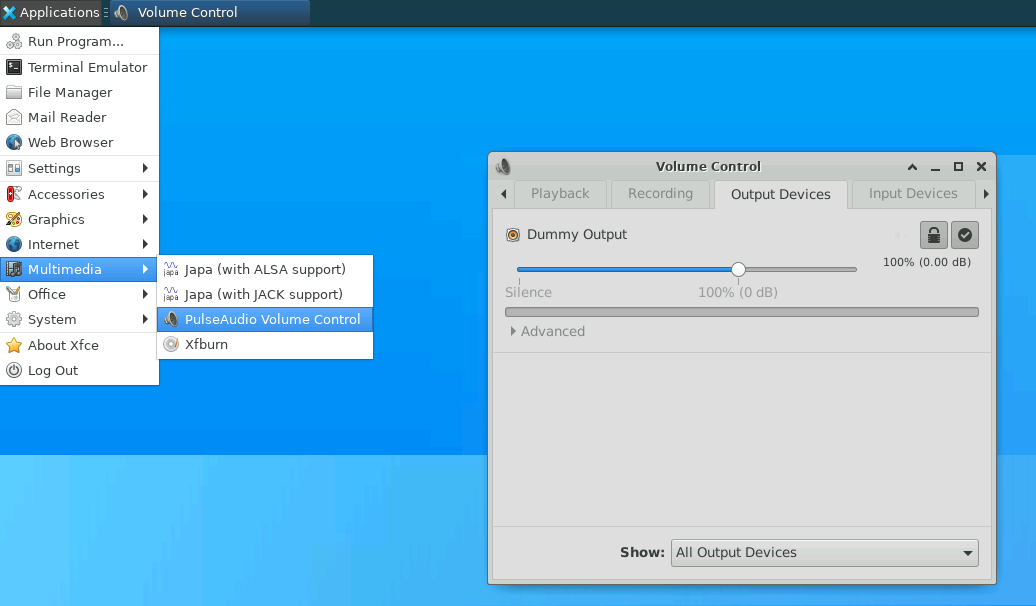
2. Check your volume control.
|
||
|
||
|
||
|
||
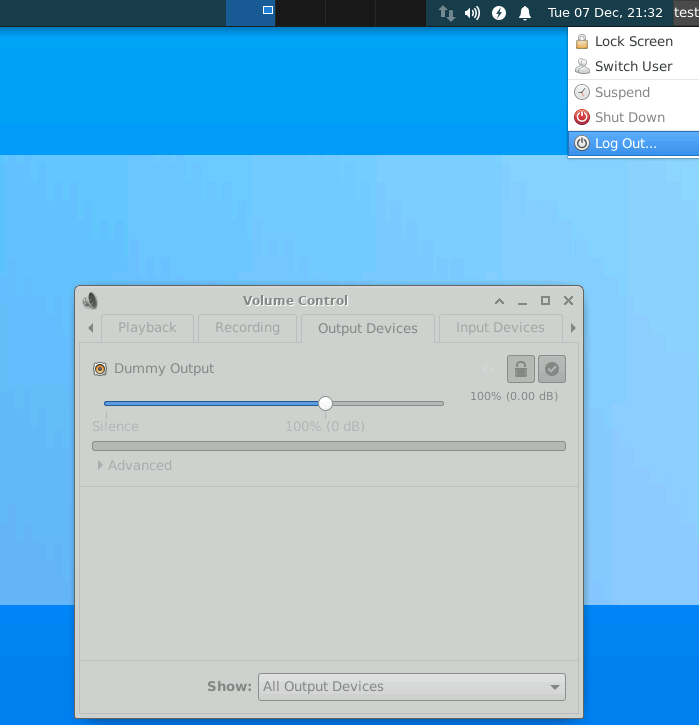
3. If it only shows **Dummy Output** like in the image above, **log out** from your **desktop** and re-login. **Logout and log in from SSH will NOT work.**
|
||
|
||
|
||
|
||
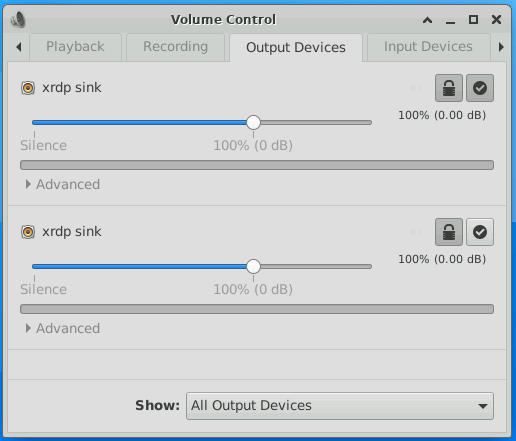
4. Log into the desktop with the same user. Check your volume control again, and it should have **xrdp sink** now, and you are now ready to use audio.
|
||
|
||
|
||
|
||
If it still does not work, please follow steps in the Debian 10 section.
|
||
|
||
### Debian 10
|
||
1. Log into your server desktop with a non-root user.
|
||
|
||
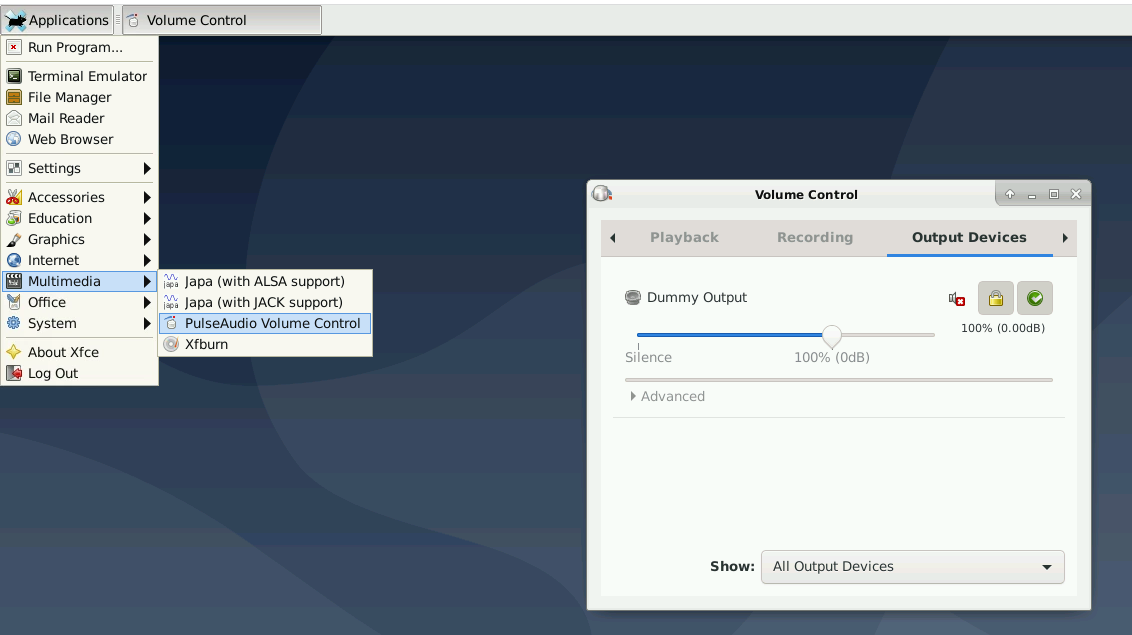
2. Check your volume control. It should only show **Dummy Output** like in the image below.
|
||
|
||
|
||
|
||
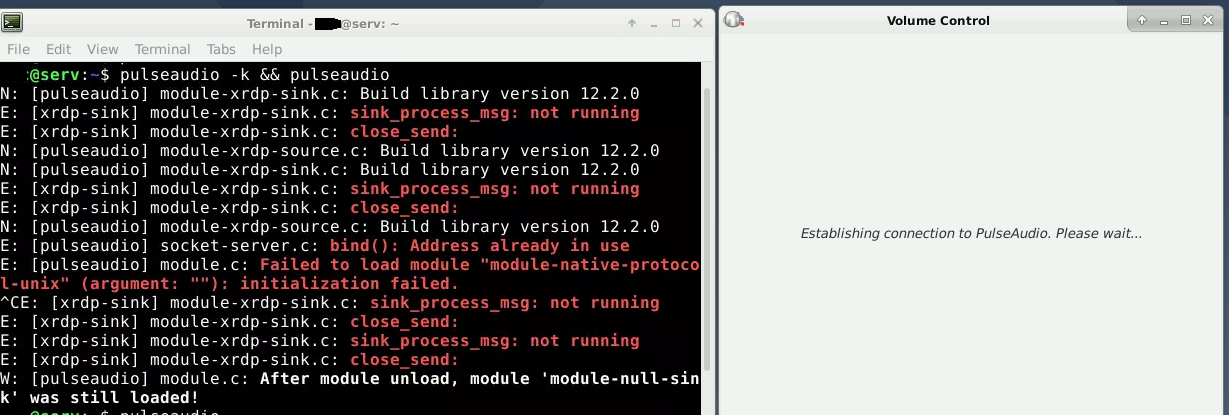
3. Bring up a terminal within your desktop (**SSH will NOT work**), and run the following command.
|
||
```
|
||
pulseaudio -k && pulseaudio
|
||
```
|
||
It is essential that you run this command in **a single line**, such that it produces an internal error, forcing itself to stop. You should see outputs similar to below.
|
||
|
||
|
||
|
||
Then press CTRL+C to exit to the terminal.
|
||
|
||
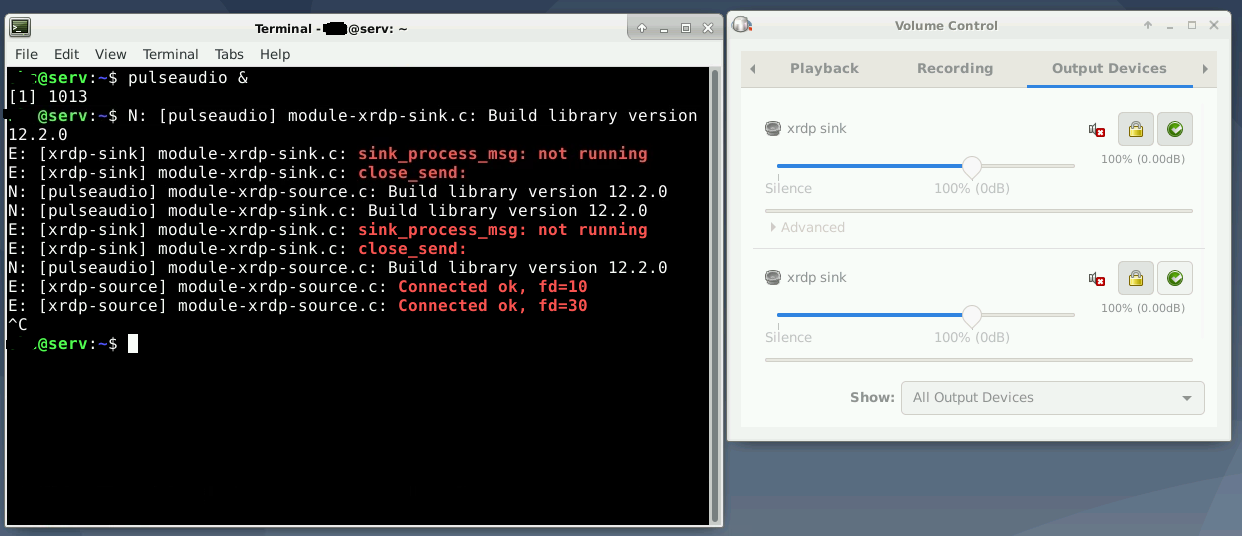
4. Run the following command to start pulseaudio in the background.
|
||
```
|
||
pulseaudio &
|
||
```
|
||
Then press CTRL+C to exit to the terminal.
|
||
|
||
|
||
|
||
You should now see **xrdp sink** in your volume control now, indicating that you have sound.
|
||
|
||
中文详细教程请看这里:https://qing.su/article/pulseaudio-audio-redirection-oneclickdesktop.html
|
||
|
||
Please report any issue that you encounter during the Audio redirection setup.
|